Swivel castors
902 products, wheel diameter 45–350 mm, load capacity 40–1100 kg per castor
-
ID 42415
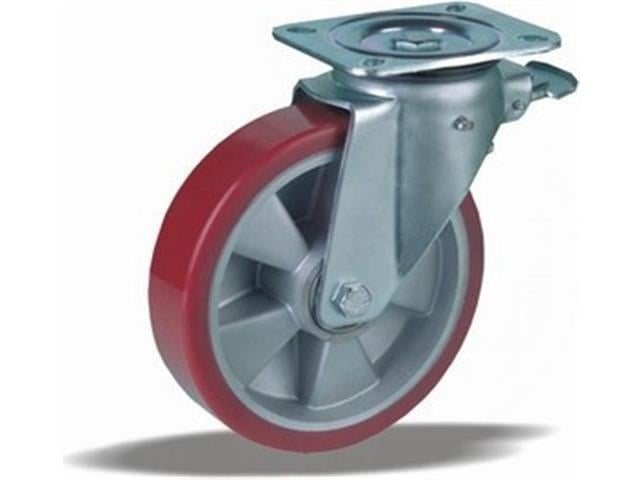 Heavy duty swivel castor with total brake 200 mm, polyurethane, 600 kg
- Top plate 140 x 110 mm
- Total height: 240 mm
- Bearing: ball bearing
-
ID 91122
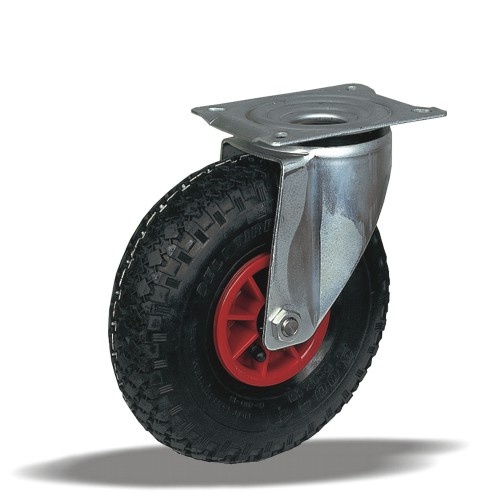 Swivel castor 260 mm, pneumatic tyre, plate 175x140 mm, 150 kg
- Top plate 175 x 140 mm
- Total height: 290 mm
- Bearing: roller bearing
-
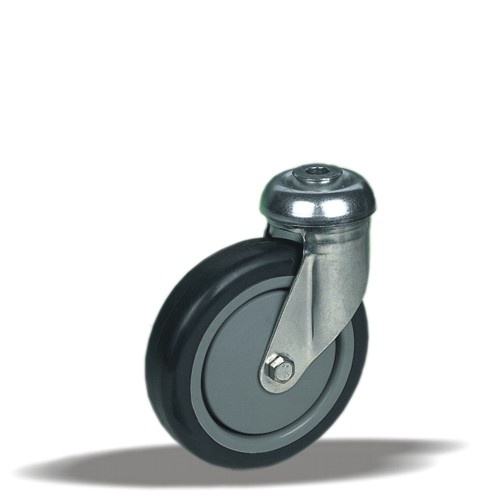
ID 42213
 Stainless steel swivel castor with total brake 125 mm, 200 kg
- Bolt hole Ø 12.5 mm
- Total height: 155 mm
- Bearing: ball bearing
-
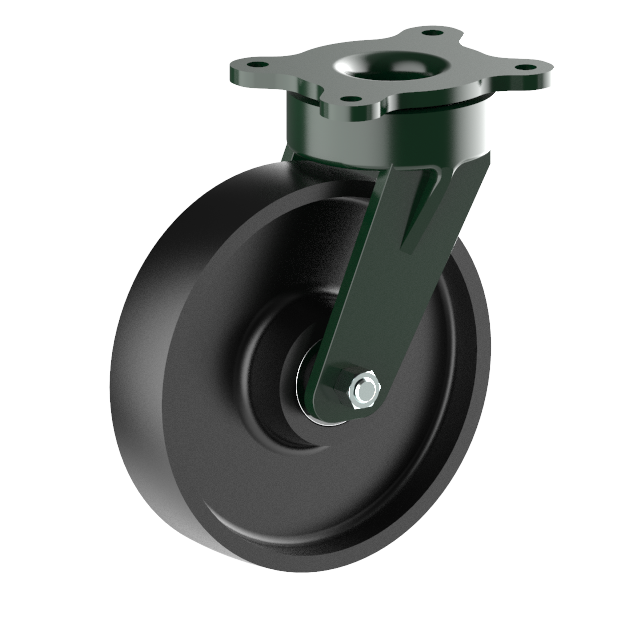
ID 31793
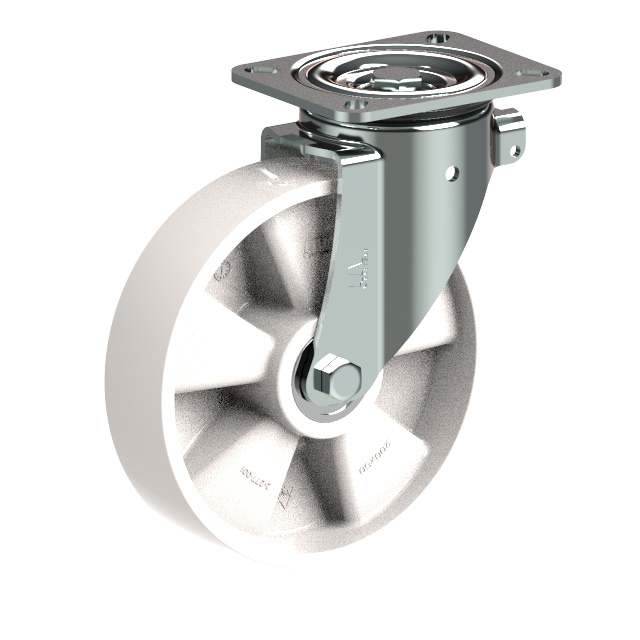 Heavy duty swivel castor 200 mm, polyamide, plate 140x110 mm, 500 kg
- Top plate 140 x 110 mm
- Total height: 240 mm
- Bearing: ball bearing
-
ID 40614
Swivel castor with total brake 100 mm, polyurethane, 150 kg
- Bolt hole Ø 12.5 mm
- Total height: 128 mm
- Bearing: plain bearing
-
ID 34045
 Swivel transport castor 200 mm, black rubber, roller bearing, 230 kg
- Bolt hole Ø 12.5 mm
- Total height: 232 mm
- Bearing: roller bearing
-
ID 40534
 Swivel castor with total brake 100 mm, polyurethane, 150 kg
- Top plate 105 x 85 mm
- Total height: 128 mm
- Bearing: plain bearing
-
ID 42893
 Swivel castor with total brake 100 mm, polyamide, ball bearing, 200 kg
- Bolt hole Ø 12.5 mm
- Total height: 128 mm
- Bearing: ball bearing
-
ID 62393
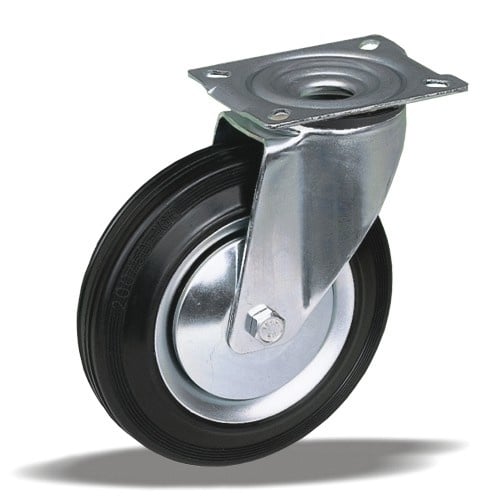 Swivel transport castor 200 mm, black rubber, plate 135x110 mm, 230 kg
- Top plate 135 x 110 mm
- Total height: 232 mm
- Bearing: plain bearing
-
ID 34815
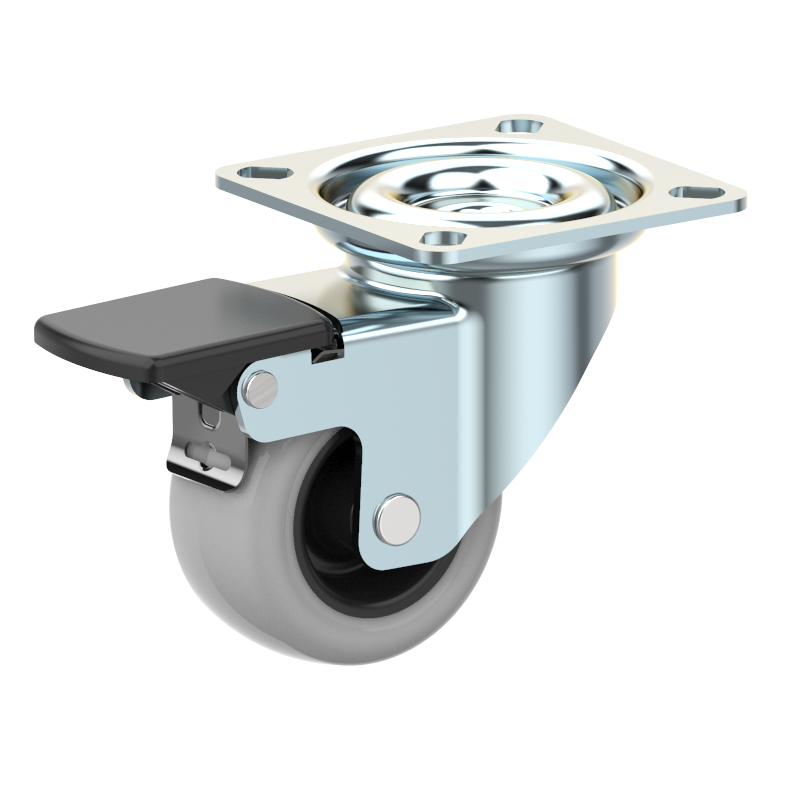 Furniture swivel castor with total brake 50 mm, TPE, 70 kg
- Top plate 60 x 60 mm
- Total height: 68 mm
- Bearing: plain bearing
-
ID 30174
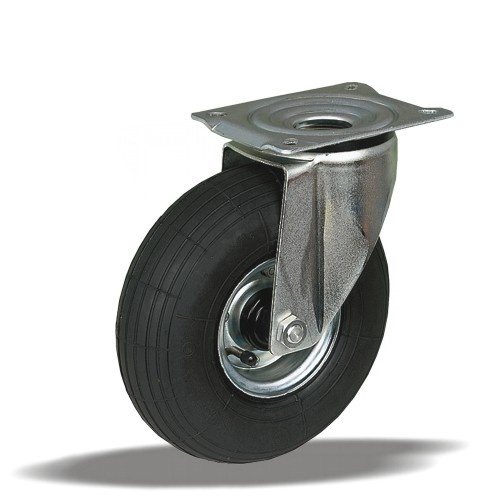 Swivel castor 260 mm, pneumatic tyre, plate 175x140 mm, 200 kg
- Top plate 175 x 140 mm
- Total height: 290 mm
- Bearing: roller bearing
-
ID 42203
 Stainless steel swivel castor 160 mm, polyurethane, 300 kg
- Bolt hole Ø 12.5 mm
- Total height: 190 mm
- Bearing: ball bearing
-
ID 22950
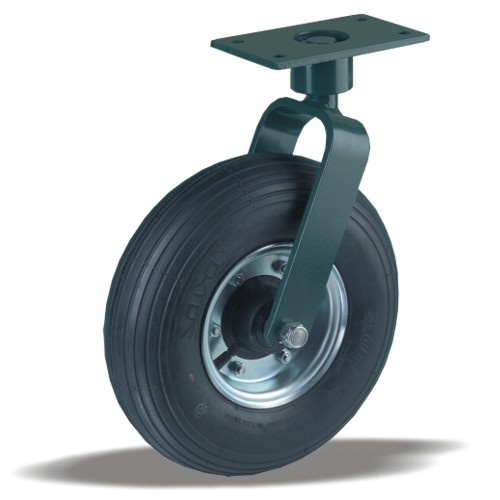 Swivel castor 350 mm, black rubber, plate 190x120 mm, 300 kg
- Top plate 190 x 120 mm
- Total height: 450 mm
- Bearing: ball bearing
-
ID 42375
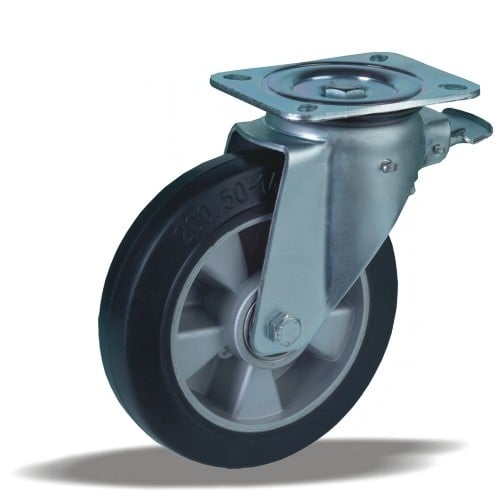 Heavy duty swivel castor with total brake 200 mm, black rubber, 500 kg
- Top plate 140 x 110 mm
- Total height: 240 mm
- Bearing: ball bearing
-
ID 42613
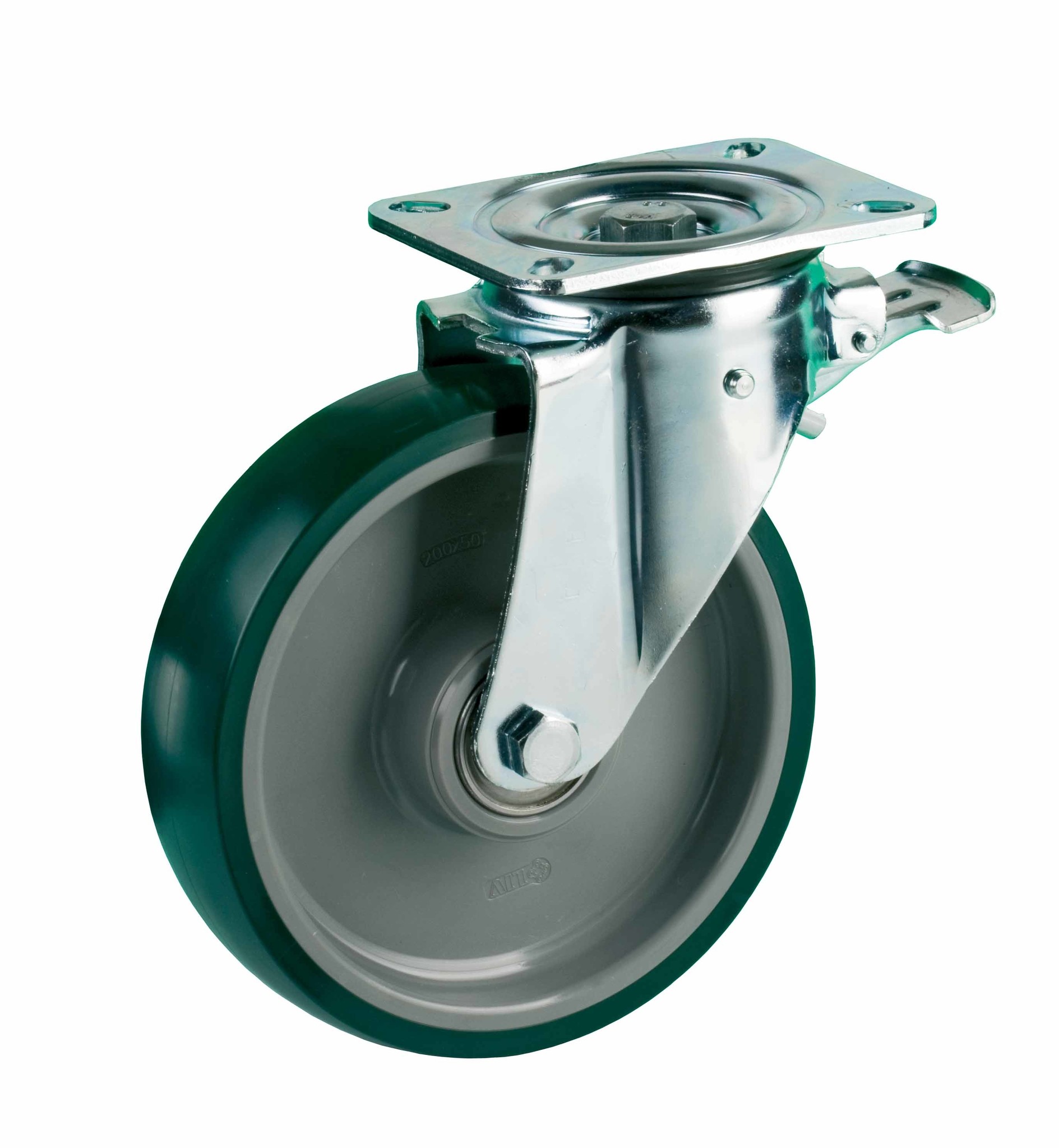 Heavy duty swivel castor with total brake 200 mm, polyurethane, 500 kg
- Top plate 140 x 110 mm
- Total height: 240 mm
- Bearing: roller bearing
-
ID 41504
 Stainless steel swivel castor 125 mm, grey rubber, 130 kg
- Top plate 105 x 85 mm
- Total height: 155 mm
- Bearing: plain bearing
-
ID 30304
 Swivel transport castor with total brake 125 mm, black rubber, 130 kg
- Top plate 105 x 85 mm
- Total height: 155 mm
- Bearing: roller bearing
-
ID 31361
Swivel castor 350 mm, pneumatic tyre, plate 190x120 mm, 300 kg
- Top plate 190 x 120 mm
- Total height: 450 mm
- Bearing: ball bearing
-
ID 41795
 Stainless steel swivel castor with total brake 160 mm, 300 kg
- Top plate 135 x 110 mm
- Total height: 190 mm
- Bearing: plain bearing
-
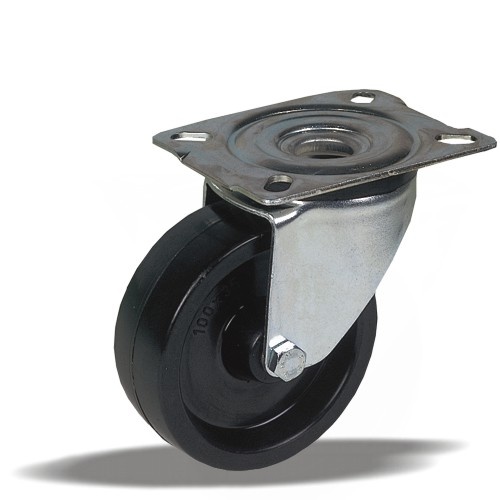
ID 40513
 Swivel castor 125 mm, polyurethane, plate 105x85 mm, 200 kg
- Top plate 105 x 85 mm
- Total height: 155 mm
- Bearing: ball bearing
-
ID 40543
Swivel castor with total brake 100 mm, polyurethane, 150 kg
- Top plate 105 x 85 mm
- Total height: 128 mm
- Bearing: ball bearing
-
ID 40545
Swivel castor with total brake 125 mm, polyurethane, 200 kg
- Top plate 105 x 85 mm
- Total height: 155 mm
- Bearing: roller bearing
-
ID 42895
 Swivel castor with total brake 100 mm, polypropylene, 125 kg
- Bolt hole Ø 12.5 mm
- Total height: 128 mm
- Bearing: ball bearing
-
ID 66847
 Swivel castor 80 mm, polyamide, plain bearing, plate 105x85 mm, 150 kg
- Top plate 105 x 85 mm
- Total height: 106 mm
- Bearing: plain bearing
Swivel castor or fixed castor
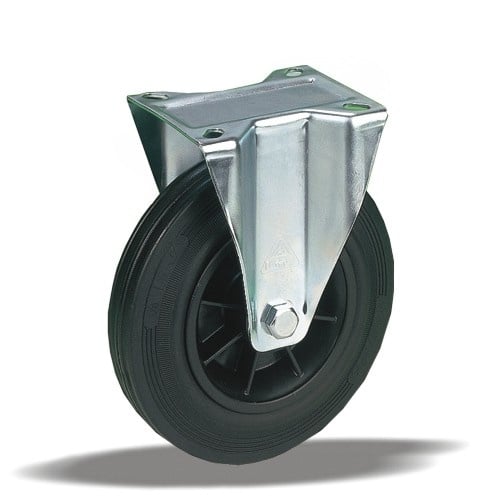
A swivel castor has a fork that turns, so it follows the trolley in any direction. A fixed castor has a rigid fork and rolls only straight. We make both in Postojna, pressing the forks from sheet steel and zinc plating them without chromium(VI). Wheels come in rubber, elastic rubber, polyurethane, polyamide, polypropylene or cast iron.
Choose by how the trolley moves, not by price. Four swivel castors let a trolley go in any direction, but it wanders on long straight runs. Two swivel castors at the handle end and two fixed castors at the far end give a trolley that tracks straight and still turns. That is the usual layout on trolleys and platform trucks. Four swivel castors pay off where the trolley is moved in tight spaces.
| Swivel castor | Braked swivel castor | Fixed castor | |
|---|---|---|---|
| Fork | turns on the swivel head | turns; the wheel, or wheel and swivel, can be locked | rigid |
| Running | follows any direction | as a swivel castor, held still when parked | straight only |
| Use | trolleys, containers, equipment | containers, equipment, trolleys on a slight slope | keeps trolleys with swivel castors on track |
| Brake | no | brake, total brake, central brake on waste containers | as a special version, also with central brake |
Fittings in the catalogue
The fitting depends on what the castor is mounted to. The catalogue lists top plate, bolt hole, stem, threaded stem and, for wheels without a fork, the wheel hub. A top plate is the most common on trolleys and containers and spreads the load over four bolts. A bolt hole, one central hole in the top of the housing, replaces the plate where there is no room, see bolt hole castors. Stems and threaded stems mostly go into tubes and furniture. Plate size, hole spacing and overall height are in the specifications of each castor.
Wheel and tread
The wheel decides floor protection, noise and rolling resistance. Elastic rubber starts with little force, runs quietly and is kind to the floor, even when the load stands for a long time. Polyurethane resists cuts and copes with stony floors. Rubber damps vibration and noise. Polyamide carries high loads and resists many chemicals, polypropylene resists acids and rolls easily; both are hard and noisy on rough ground. Cast iron carries the most and is hardest on the floor. For outdoor and uneven ground there are pneumatic tyre wheels and castors.
Where the floor must stay unmarked, filter for non-marking treads. A larger wheel starts more easily and rolls over joints and thresholds better.
Bearings and load capacity
Plain, roller and ball bearings differ in rolling resistance and price. A plain bearing is enough for short distances and light loads. Roller and ball bearings pay off where a trolley is pushed often and far.
The catalogue load capacity is per castor at 4 km/h. With four castors, divide the weight of trolley plus load by three, because on an uneven floor often only three carry. For loads of several hundred kilograms per castor, go to our heavy duty castors.
Swivel castors with brake
A braked swivel castor holds the trolley still when parked. We supply a brake that locks the wheel and a total brake that locks wheel and swivel. Waste containers use central brakes and our 3-STOP brake, see waste container castors. All braked swivel castors are under braked castors.
If you are replacing an existing castor, send us the drawing or the dimensions and we confirm the match. CAD models in STEP and IGES format are available on request.
Frequently asked questions
What is the difference between a swivel castor and a fixed castor?
A swivel castor has a fork that turns and follows the direction of push. A fixed castor has a rigid fork and rolls only straight.
How many swivel and fixed castors does a trolley need?
The usual layout is two swivel castors at the handle end and two fixed castors at the far end. The trolley then runs straight and still turns. For tight spaces, fit four swivel castors, at least two of them braked.
What load capacity do I need per swivel castor?
Divide the weight of the trolley plus load by three when four castors are fitted. A trolley with a total weight of 600 kg needs castors rated for at least 200 kg each. The catalogue figure is per castor at 4 km/h.
Which fitting is usual?
The top plate. Bolt hole, stem and threaded stem are the alternatives when the design calls for them.
Which tread for factory floors and for outdoor use?
On smooth factory floors, elastic rubber or polyurethane, both protect the floor. Outdoors and on uneven ground, pneumatic tyres or rubber; on stony ground, polyurethane.
Can I get CAD models for a swivel castor?
Yes. We send CAD models in STEP and IGES format on request. Give us the article number.